c = f * l
c = speed of light, f = frequency, l = wavelength
light: electromagnetic radiation
rule: The shorter the wavelength, the more active the radiation.
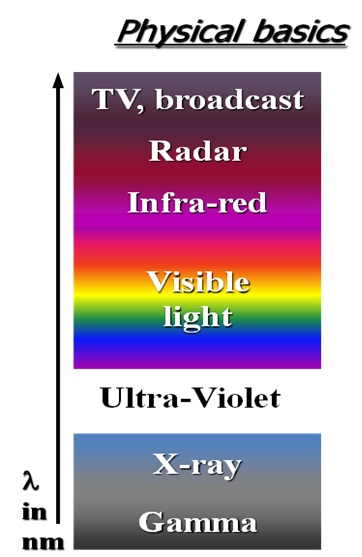
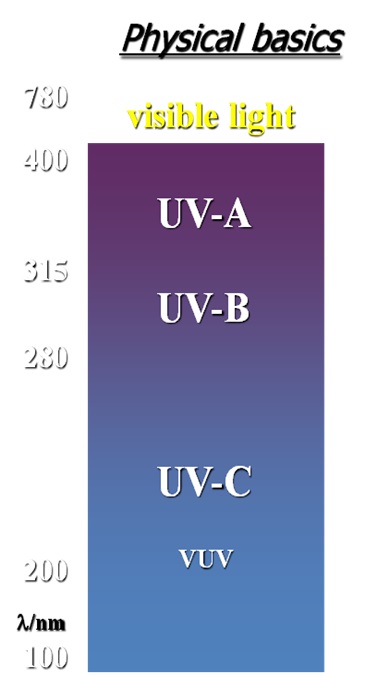
Ranges of UV Light :
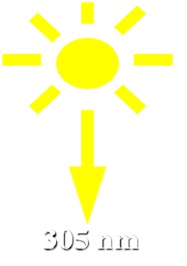
Effects of UV radiation
- Chemical effects
- Curing of plastics, colours and laquers, glues
- Photochemical effects
- Cracking of harmful substances in waste water
- Cracking of bad odours in air
- Biological effects
- Burn, sunburn
- Human skin ageing
- Medical therapy
- Disinfection of water, air and surfaces
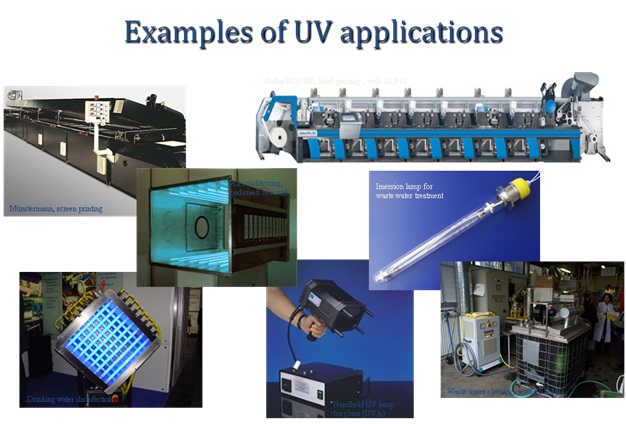
UV-lamps, relevant factors
- quartz tube diameter, electrodes, seals, sockets and connection leads
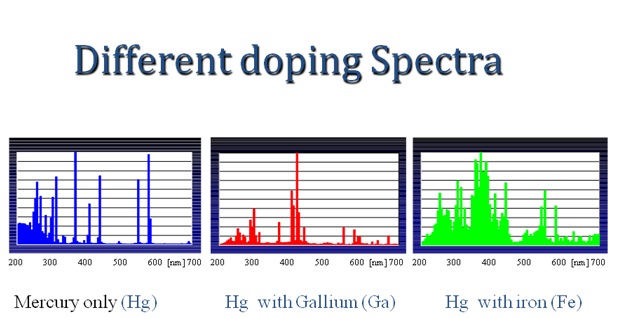
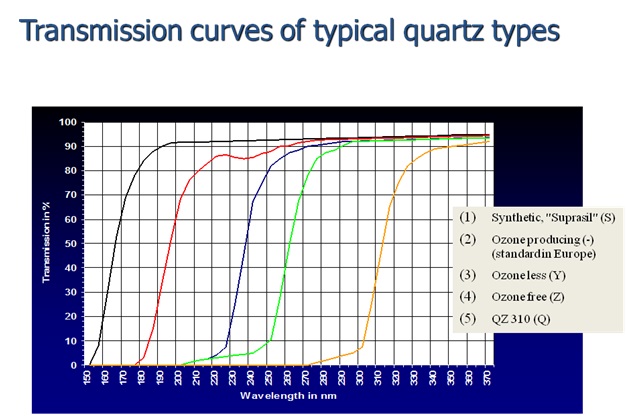
- spectra, doping, quartz types
- energy proportion
30% UV, 15% light, 55% heat (IR) - life time
Characteristics of UV-lamps
- Lamp power in W/cm
- Spectrum, doping (Filling) and quartz type
- Lamp tube diameter
- Lamp operating voltage (V)
lamp operating current (A) or power
- Arc length
- Total length (inclucing sockets)
- Sockets (dimensions, ceramic or metal)
- Lead length
Life time of UV-lamps
What influences lamp life duration ?
- Cooling
Air exhaust temperature, amount of air exhaust,
air distribution over the lamp - Lamp selection
matching to the application
(spectrum, tube diameter, electrical values) - Lamp quality
Halogen cycle preventing blackening, “Ever Clear” - Treatment by customer
careful handling and installation, regular cleaning
Electrical operation of UV-lamps
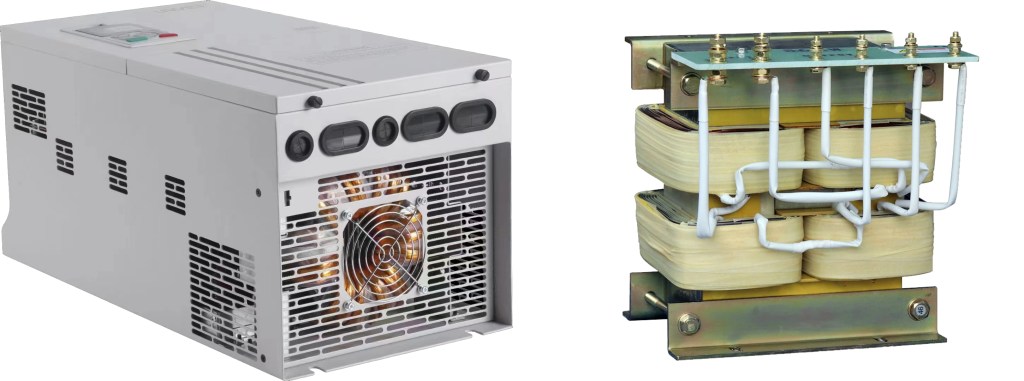
- A ballast is necessary for limiting lamp the current and responsible for the lamp power.
- Types of ballasts/power supplies:
- capacitive (constant wattage power supply)
- inductive
- chokes (up to ~5 kW)
- Step up transformer with choke (up to ~9 kW)
- Leakage transformer (over 9 kW)
- inductive with saturable core (transductor)
- inductive with SCR control (Triac)
- fully electronic EPS (up to 17 kW)
Devesh K S Rathore
DR Optical Disc India Pvt. Ltd.
drathore@dr-odi.com



 DRATHORE - BLOG
Leave a comment